
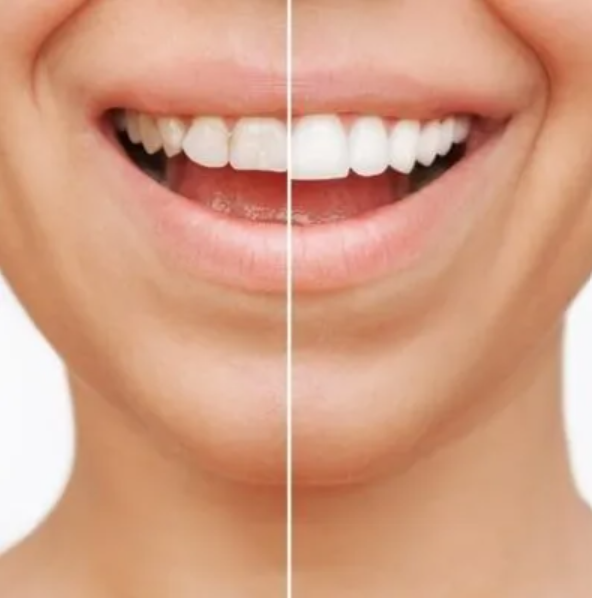
Bonding is commonly used for cosmetic reasons to enhance the appearance of teeth that are stained, uneven, or chipped, and can sometimes be used to close small gaps between teeth.
Composite bonding is a cosmetic dental treatment where tooth-coloured resin is applied to improve the appearance of chipped, misaligned, or discoloured teeth. It can also be used to reshape or resize your natural teeth, creating a more even and aesthetically pleasing smile.
The process begins with a detailed assessment of your bite, tooth shape and size, colour, facial symmetry, and speech. The tooth surface is then cleaned and lightly roughened to allow the bonding material to adhere. A primer and composite resin are applied and carefully sculpted to achieve your desired shape. The resin is then hardened using a curing light, followed by polishing to create a smooth, natural-looking finish.
Your composite bonding dentist will give you clear aftercare guidance to help maximise the lifespan of your treatment. On average, composite bonding lasts around 5–7 years and can be refreshed or repaired when required.
Longevity depends on several factors, including your dentist’s skill and precision particularly in relation to your bite and occlusion as well as your commitment to maintaining excellent oral hygiene. Staining can occur depending on your diet, so attending regular hygiene appointments as advised is essential. If you grind or clench your teeth, your dentist may recommend wearing a night guard to reduce the risk of chipping or breakage.
After your initial consultation, treatment can usually be completed in a single visit. On average, bonding one tooth takes 30–60 minutes. As we focus on achieving the best possible result, additional appointments for fine-tuning, shaping, or polishing may occasionally be recommended.
No injections required
No downtime after treatment
Often completed in just one appointment
Minimally invasive with no drilling of natural tooth structure
Faster and less complex than veneers, Invisalign, or fixed braces
Composite bonding is an efficient, conservative way to enhance your smile with natural-looking results.
Both composite bonding and veneers can enhance the appearance, colour, and shape of your teeth, delivering noticeable aesthetic improvements. However, they are not the same treatment, and understanding the differences is essential in choosing the option that best suits your individual needs and goals.
| Feature | Composite Bonding | Veneers |
|---|---|---|
|
Material |
Tooth-coloured composite resin |
Porcelain or composite resin |
|
Durability |
Lasts 5–7 years with proper care |
Porcelain veneers last 10–15 years; composite veneers last 5–7 years |
|
Procedure Time |
Can be completed in a single visit |
Typically requires at least two visits |
|
Cost |
£200 – £400 per tooth |
£400 – £950 per tooth |
|
Aesthetic Quality |
Natural-looking but susceptible to staining |
Porcelain veneers resist stains and provide a more lifelike appearance |
|
Tooth Preparation |
Minimal or no enamel removal required |
Enamel removal required for proper veneer fit |
|
Reparability |
Easy to repair if damaged. Please contact your treatment co-ordintator to book an appointment. |
More difficult and more expensive to repair. This can result in our laboratory having to remake your porcelain veneer. |
The cost of composite bonding varies upon the complexity and how many teeth require bonding. We provide both composite edge bonding and full surface composite bonding and therefore fees range from £200 – £400 per tooth.
Over time composite bonding can stain. The main reasons are habits such as smoking or consuming heavily coloured food or drink. The reason for this is that the composite material used is more porous than the enamel on your natural tooth and therefore discolouration can occur. To keep staining to a minimum, your composite bonding dentist would advise regular airflow hygiene visits.
To make an appointment or have a general enquiry please use our contact form and we will aim to get back to as soon as possible.
0207 450 2920
info@battersea-dentist.co.uk
07770 463413
158 – 160 Battersea Park Road
London
SW11 4ND
